Creative Design: Types, Importance in Everyday Life, and How It Changes the World
Design is everywhere.
From the cover of a book and the shape of a smartphone to a website interface, a product package, a clothing collection, or a simple printable planner, design influences the way we see, understand, choose, and interact with the world around us.
But design is much more than making things look beautiful.
It is a way of thinking, communicating, solving problems, and transforming ideas into meaningful experiences.
What Is Creative Design?
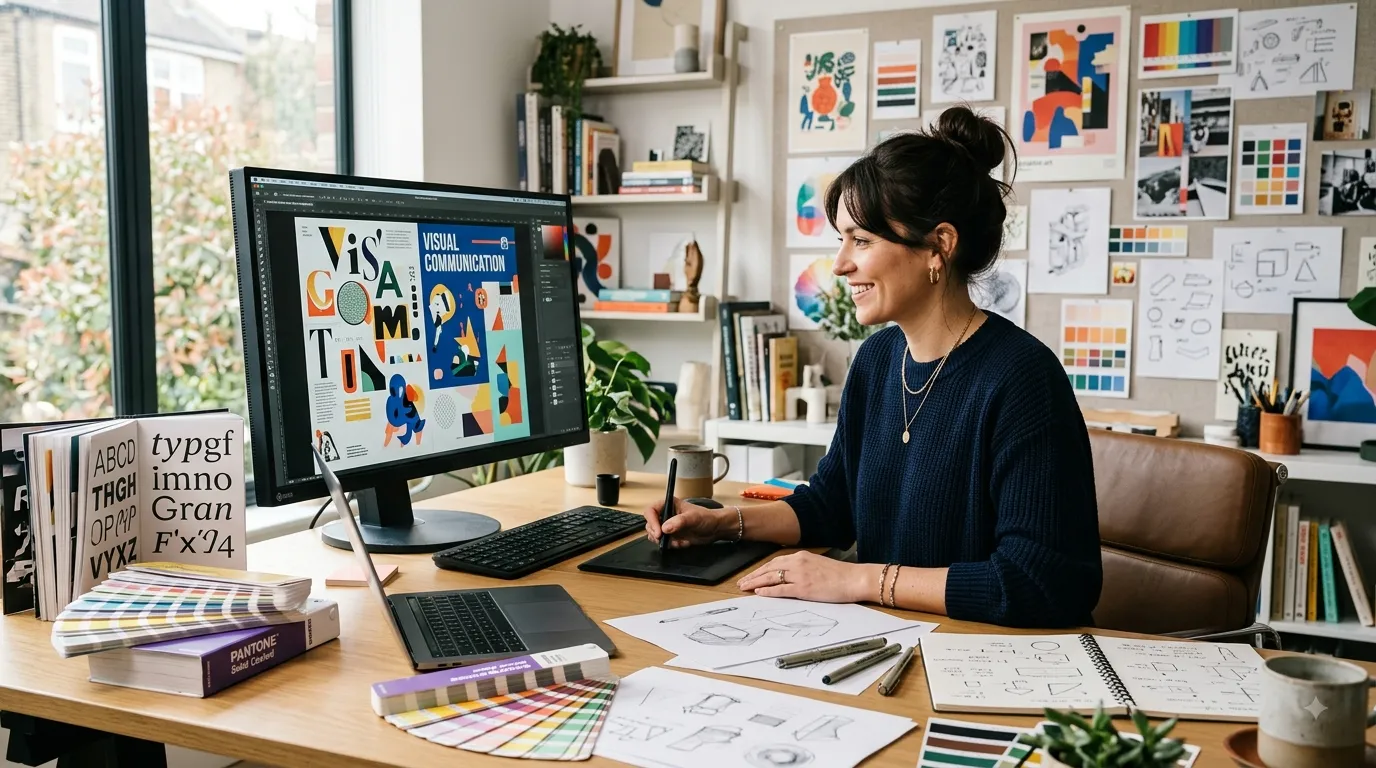
Design is not simply a collection of beautiful colors, drawings, or visual effects. It is a form of communication that can translate ideas and concepts into visual or functional experiences.
In visual communication, the goal is not simply to make something attractive. The goal is to make a message easier to understand, remember, and act upon. Adobe describes visual communication as using visual structure, imagery, layouts, and design choices to make meaning clearer and reduce unnecessary complexity.
Design can therefore be described as a bridge between an idea and its audience.
It combines creativity with purpose, aesthetics with function, and imagination with practical problem-solving.
The world of design is broad. It includes graphic design, branding, advertising, digital design, UI/UX, environmental design, product design, fashion design, and print and publishing design.
Although these disciplines differ in their methods and applications, they share a fundamental objective:
to create something meaningful, useful, understandable, and appropriate for its intended audience.
Design and Art: What Is the Difference?
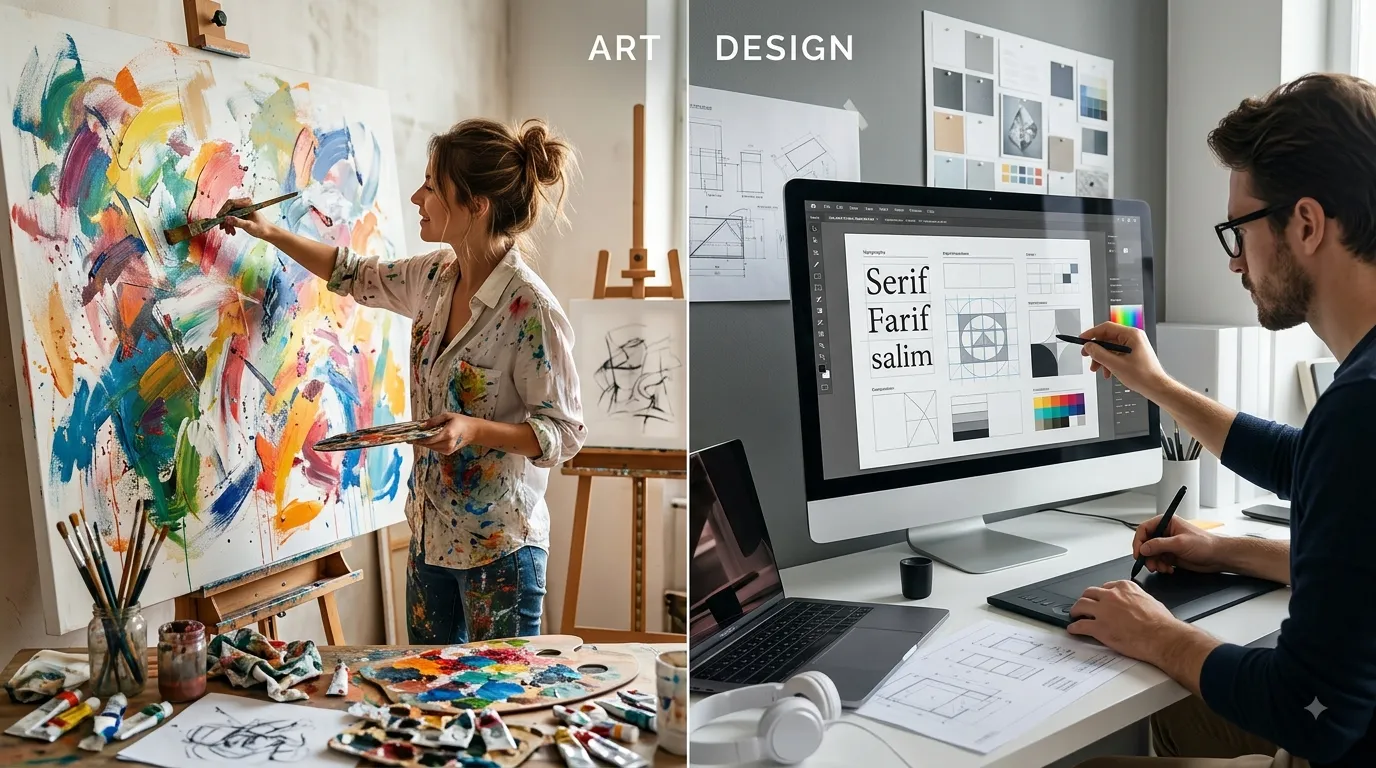
Design and art have many things in common. Both can involve creativity, imagination, visual expression, composition, color, form, and emotion.
However, their primary purposes can be different.
Design Is Purpose-Driven
Design usually begins with a purpose.
A designer may need to communicate a message, solve a problem, improve a product, create a recognizable brand, or make an experience easier to use.
This means that a designer has to consider the audience, context, function, limitations, and desired outcome.
A beautiful design that fails to communicate its message may not be successful.
For example, an advertisement may look visually impressive, but if the viewer cannot understand what is being promoted or what action they should take, the design has failed part of its purpose.
Art Allows Greater Personal Expression
Art can provide a broader space for personal expression.
An artist may create a painting, illustration, sculpture, or other artwork to express emotions, explore ideas, document an experience, or simply create something meaningful.
An artwork may intentionally have multiple interpretations, with different viewers finding different meanings in it.
This does not mean that art has no purpose or that design cannot be artistic.
Rather, the key difference is often the relationship between creative expression and intended function.
Design generally has to work for someone and accomplish something.
Why Is Design Important in Everyday Life?
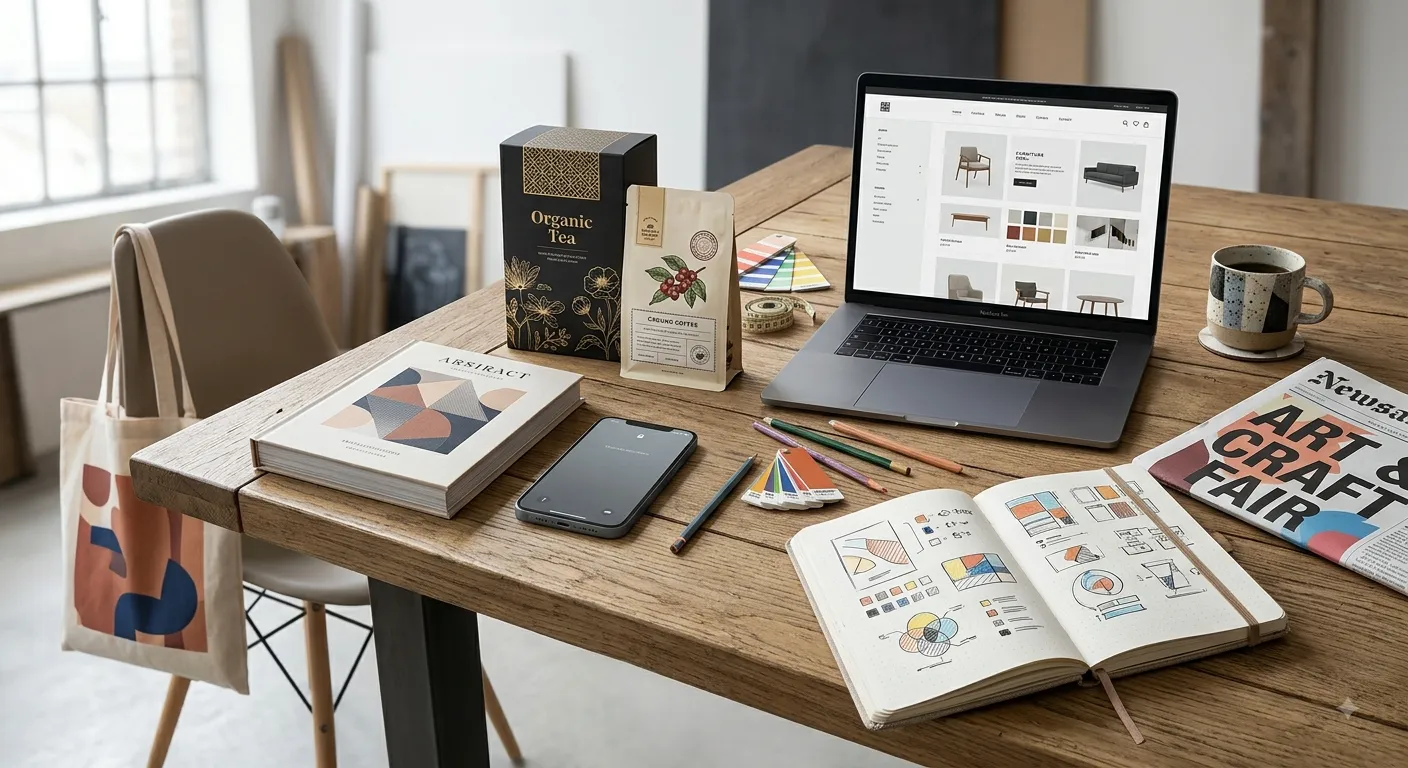
We interact with design constantly, often without consciously noticing it.
Consider a few everyday examples.
You may notice an online advertisement because its visual composition immediately attracts your attention.
You may pick up a book because its cover communicates something interesting before you even read the title.
You may prefer one smartphone because its interface looks intuitive and its physical design feels comfortable.
You may trust one brand more than another because its website, packaging, typography, colors, and communication feel consistent and professional.
These examples demonstrate why design is not merely decoration.
Design influences perception and communication.
Effective visual communication creates a clear hierarchy so that viewers can quickly identify what matters most. Elements such as typography, scale, contrast, spacing, alignment, and color can guide the viewer's attention and make information easier to understand. Adobe identifies hierarchy, emphasis, scale, proportion, contrast, and repetition among the important principles designers use to organize visual information.
This is why successful design often feels natural.
The viewer may not consciously think about the typography, spacing, or visual hierarchy. Instead, the information simply feels easy to understand.
Major Types of Design
Design is a broad field with many disciplines. Each one addresses different problems and serves different purposes.
1. Graphic Design
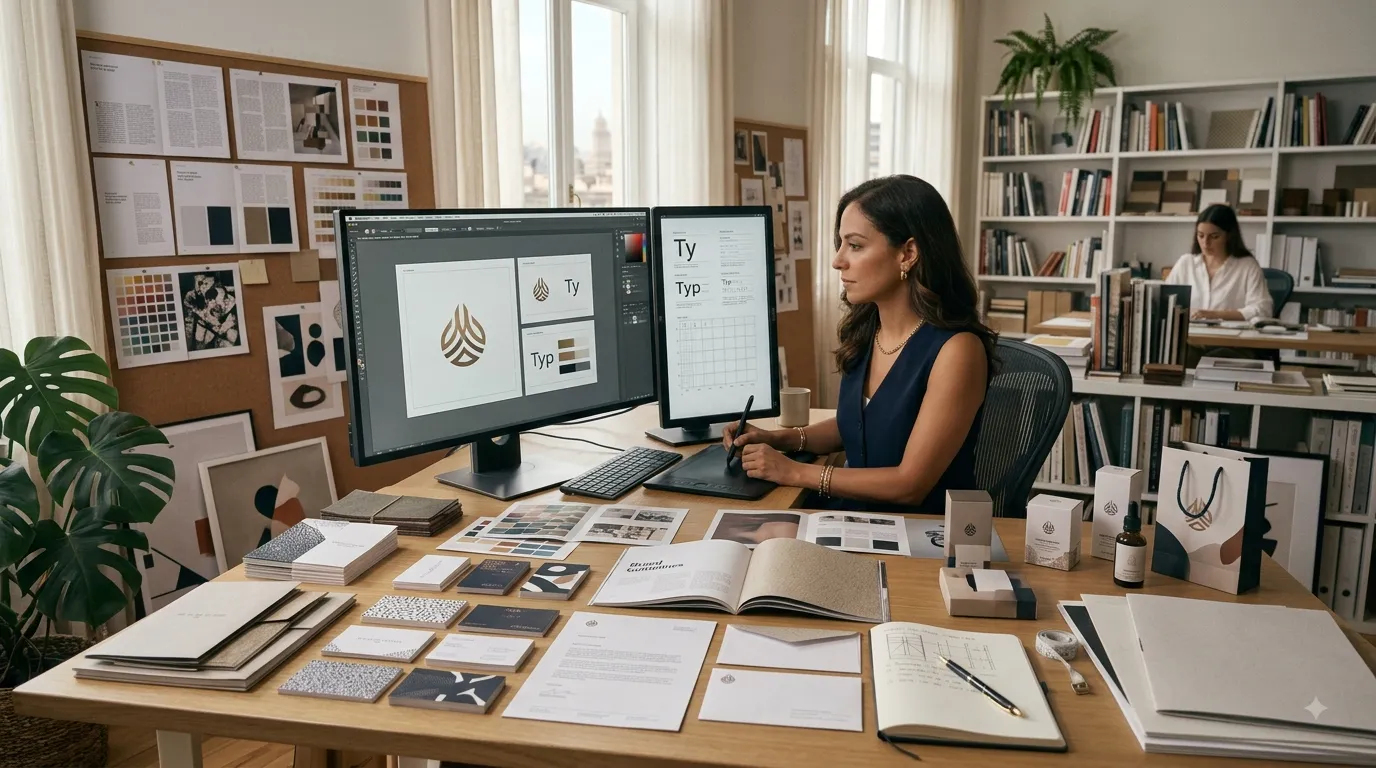
Graphic design focuses on visual communication through elements such as typography, images, color, shapes, composition, and layout.
Graphic designers create visual materials for both physical and digital environments, including advertisements, branding, publications, social media graphics, posters, packaging, and more.
Adobe describes graphic design as visual communication that combines visual and textual elements to communicate ideas and messages.
Branding and Identity Design
Branding and identity design creates a consistent visual language for a business, organization, or product.
It may include:
Logos, Color palettes, Typography, Icons, Photography styles, Illustration styles, Packaging, Business .stationery,Brand guidelines
A strong visual identity helps people recognize a brand and distinguish it from competitors.
The objective is not simply to create an attractive logo. It is to build a coherent visual system that communicates the personality, values, and character of the brand.
Marketing and Advertising Design
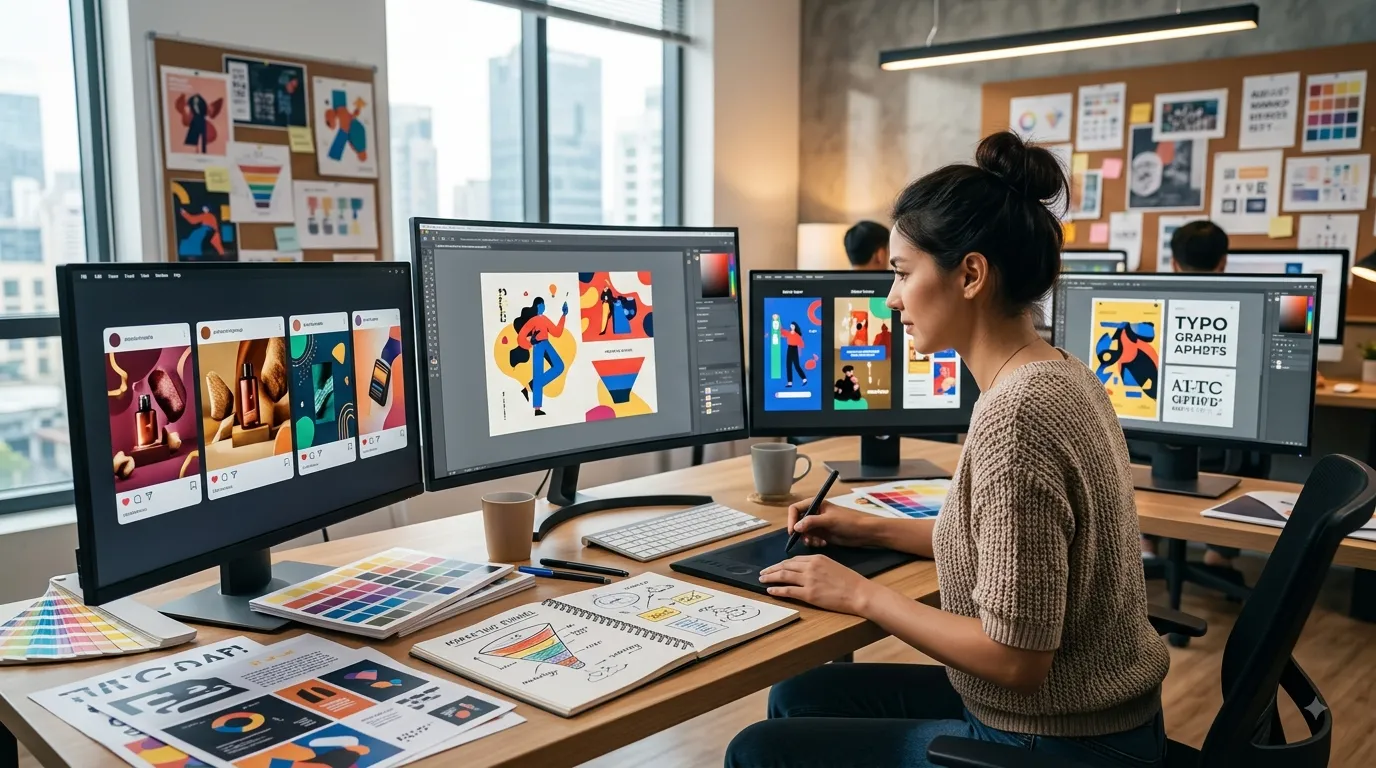
Marketing and advertising design combines creative communication with business objectives.
Its purpose is to communicate promotional messages and encourage a specific response, such as learning more about a product, visiting a website, subscribing to a service, or making a purchase.
Advertising design can appear in:
Social media campaigns, Digital advertisements, Posters, Banners, Print advertisements, Outdoor .advertising, Promotional materials, Video advertising
Good advertising design must attract attention while keeping the message clear.
2. Digital Design
Digital design focuses on experiences and visual communication created for digital platforms.
It includes websites, mobile applications, digital products, interactive interfaces, online platforms, and other screen-based experiences.
Digital design is not only about appearance. It must also consider how people interact with digital content.
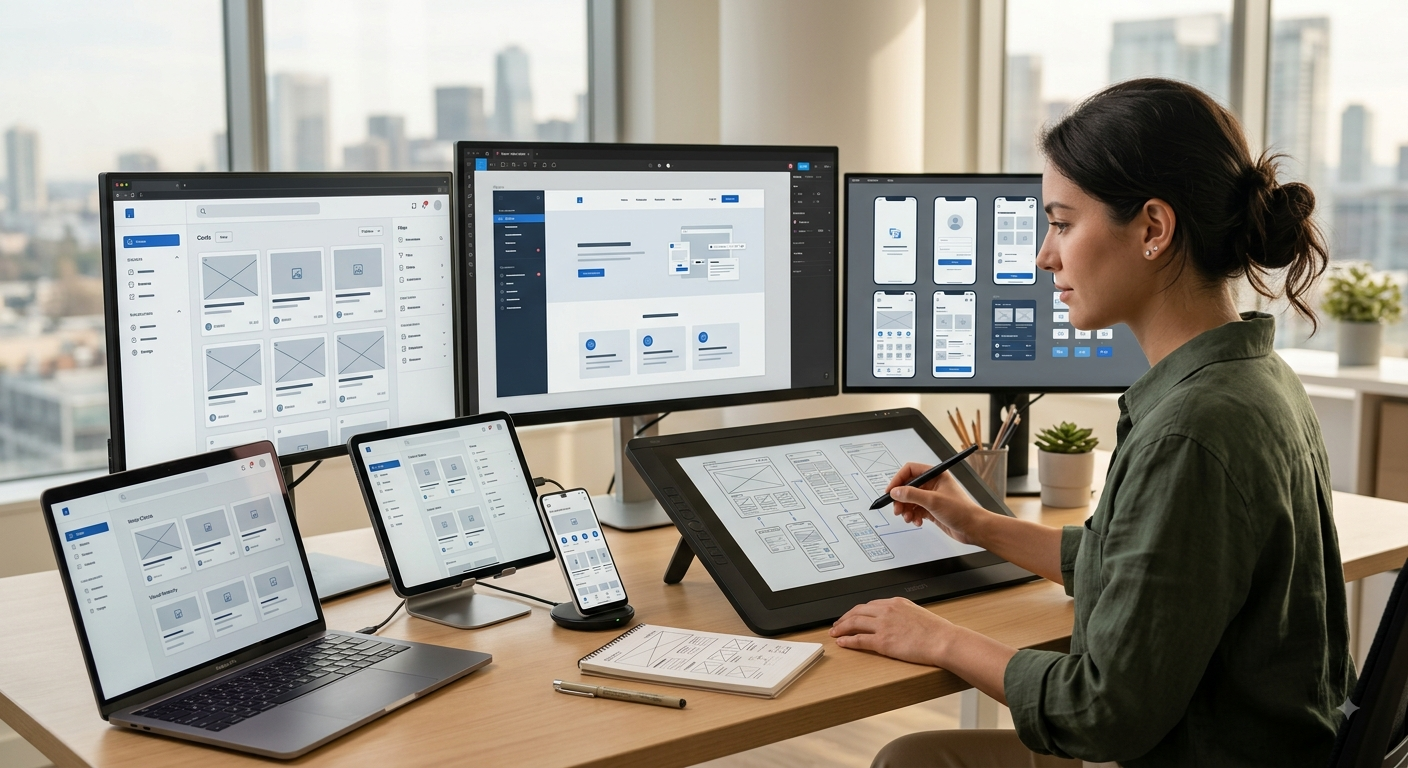
UI/UX Design
UI stands for User Interface, while UX stands for User Experience.
UI design focuses on the visual and interactive elements users encounter, such as buttons, menus, icons, typography, colors, and layouts.
UX design is broader. It considers the overall experience a person has while interacting with a product, system, or service, including usability, accessibility, functionality, visual design, and emotional response. IBM describes UX as a multidisciplinary field that combines design, psychology, engineering, business, and user research.
A successful digital product therefore needs more than an attractive interface.
It needs to be understandable, accessible, intuitive, and useful.
3. Environmental and Spatial Design
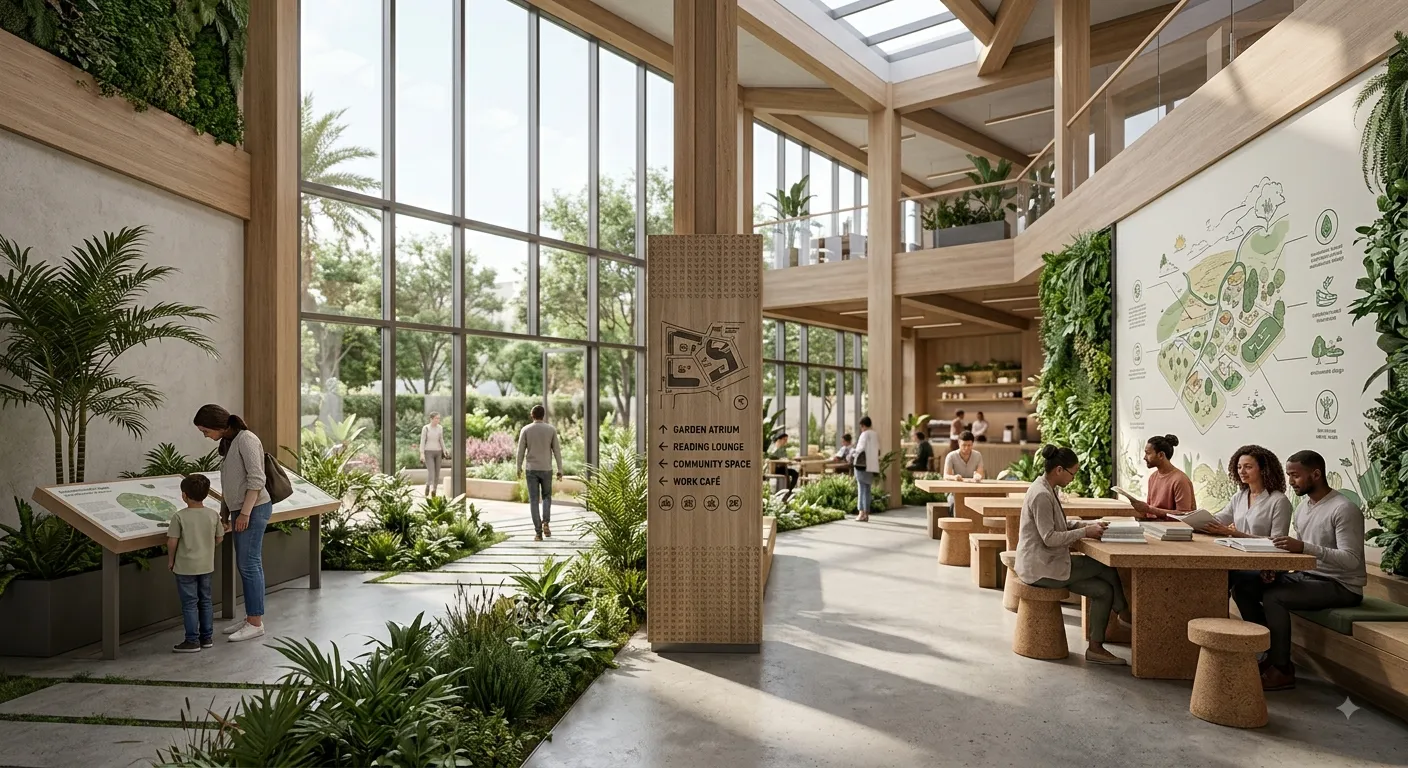
Environmental and spatial design focuses on the relationship between people and physical spaces.
It can combine architecture, interior design, graphic communication, signage, navigation systems, and environmental elements.
Examples include:
Wayfinding systems, Public signage, Maps, Exhibition spaces, Architectural graphics, Interior .environments, Sustainable spaces
A well-designed environment can help people navigate a space, understand information, feel comfortable, and interact more naturally with their surroundings.
4. Product and Fashion Design
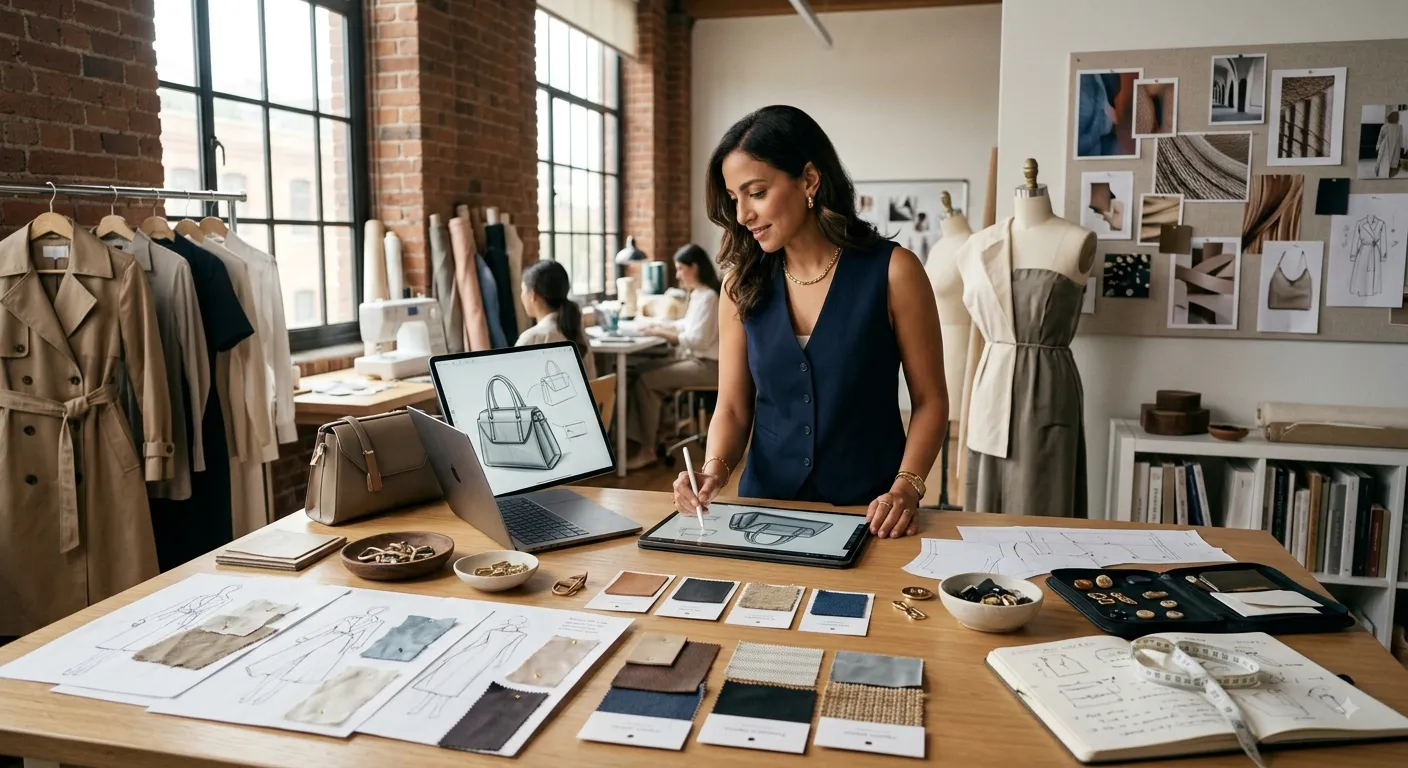
Product design combines creativity, technical knowledge, materials, functionality, manufacturing considerations, and user needs.
Fashion design applies creative and technical thinking to clothing, accessories, textiles, and wearable products.
The design process may include:
Research, Inspiration, Sketching, Material selection, Prototyping, Testing, Refinement, Final production
A successful product should provide value while balancing appearance, functionality, quality, durability, usability, and cost.
This is where creativity becomes practical.
The designer is not simply asking:
- "Does it look good?"
- The designer also asks:
- "Does it work?"
- "Is it useful?"
- "Is it comfortable?"
- "Can people use it easily?"
- "Can it compete in the market?"
5. Print and Publishing Design
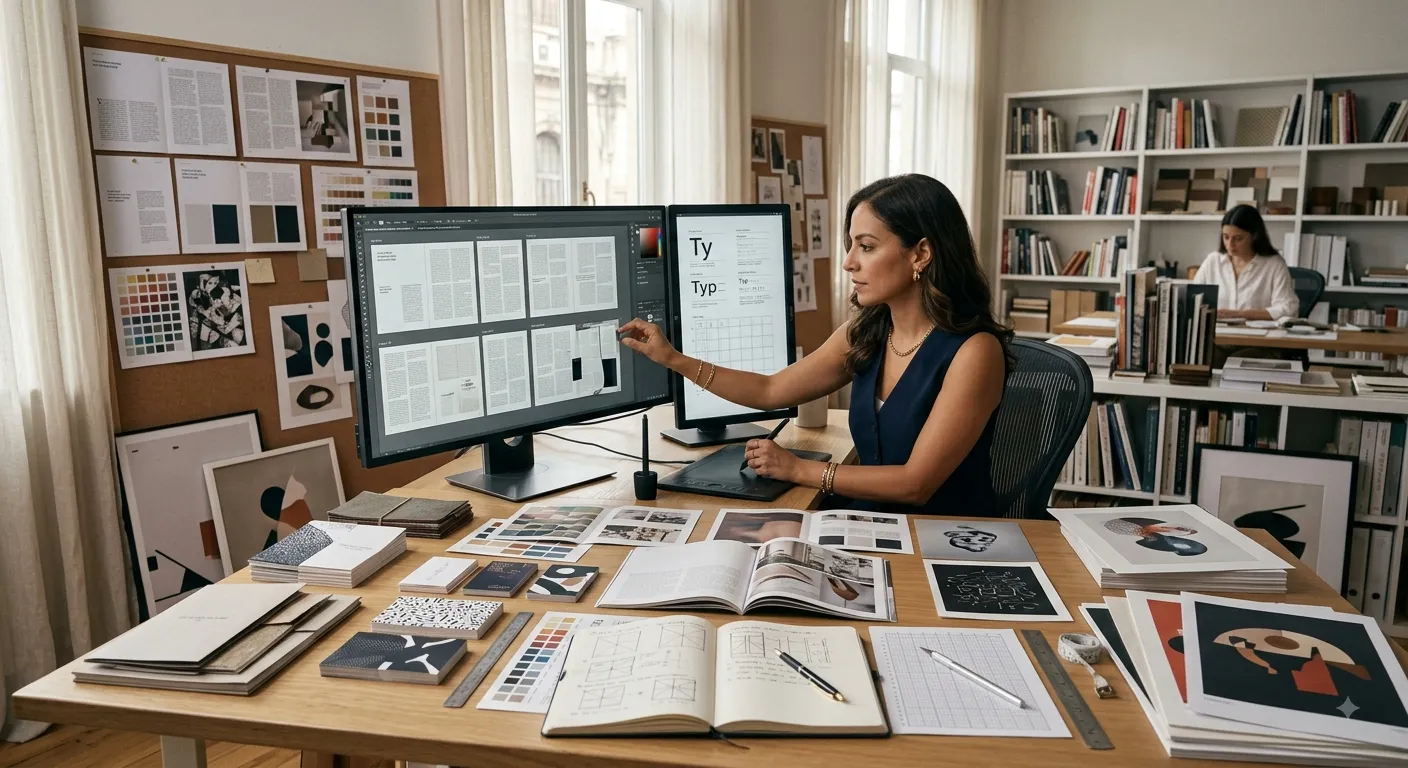
Print and publishing design focuses on organizing typography, images, layouts, and visual elements for printed and publication-based materials.
Examples include:
Books, Magazines, Brochures, Catalogs, Guides, Menus , Business cards, Posters, Art prints, Apparel graphics, Printable products
Good publication design makes information easier to navigate while creating a visually consistent experience.
Typography, spacing, alignment, hierarchy, and white space play an important role in creating readable layouts. Adobe's current layout principles emphasizes white space and organizing relate elements as important foundations for communicating a message effectively.
In today's digital environment, print design frequently overlaps with digital design because many printed products are created using digital design software before being prepared for production.
What Makes a Design Successful?
A successful design begins with a clear purpose.
Before choosing colors, fonts, images, or decorative elements, a designer should understand:
- What is the message?
- Who is the audience?
- What should the audience understand or do?
- What problem is the design solving?
Visual communication works best when the design is built around a clear goal rather than decoration alone. Adobe recommends establishing the main message first and then organizing the visual hierarchy around it.
Some of the qualities that can strengthen a design include:
Clarity, Simplicity, Creativity, Originality, Balance, Contrast, Visual hierarchy, Consistency, Accessibility, Functionality Appropriate use of space
However, simplicity does not mean boring.
A simple design can be highly creative when every element has a reason to exist.
Design Thinking: Creativity Meets Problem-Solving
One of the most important developments in modern design is the growing emphasis on design thinking.
Design thinking is a solution-oriented approach that puts users at the center of the problem-solving process.
IBM describes design thinking as a nonlinear, iterative framework focused on understanding users and developing solutions that are desirable, feasible, and viable.
Instead of assuming that the designer already knows the perfect answer, the process encourages teams to understand people's needs, generate ideas, create solutions, test them, learn from feedback, and improve them.
This makes design more than a visual discipline.
It becomes a way of thinking.
A designer can ask:
- Who is going to use this?
- What problem are they experiencing?
- What makes the experience difficult?
- How can the solution become clearer, easier, or more useful?
This human-centered approach is also reflected in IBM's design philosophy, which emphasizes focusing on user outcomes and continuously improving solutions based on changing needs.
Design as an Investment in Success
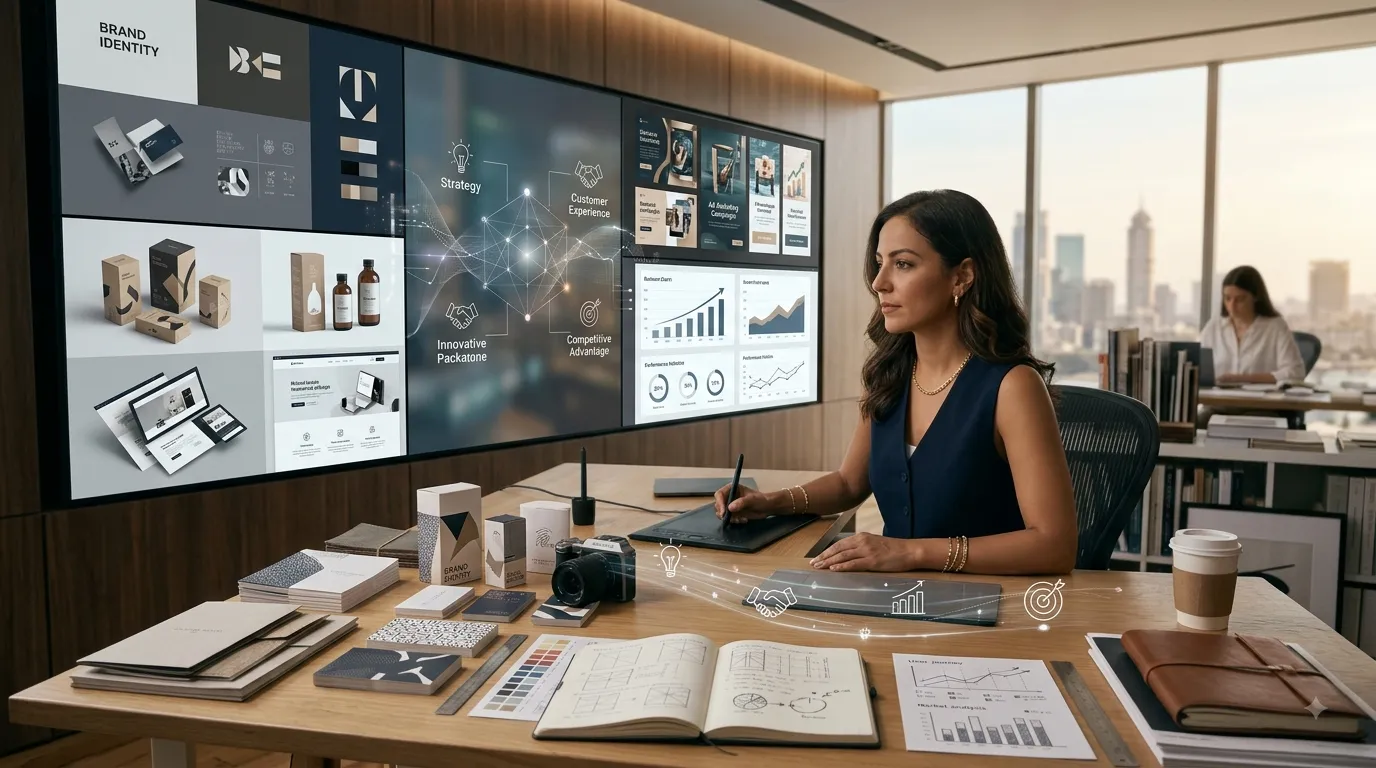
Professional design goes beyond visual attractiveness.
For businesses, design can influence branding, communication, product presentation, customer experience, usability, and the way people perceive a company.
A consistent visual identity can help a brand become recognizable.
A clear website can make information easier to find.
An intuitive interface can reduce friction for users.
A well-designed product can make its benefits easier to understand.
A compelling advertisement can communicate a message quickly.
In other words, design can connect creative decisions with practical business objectives.
Human-centered design is particularly important because successful products and services need to respond to real user needs. IBM's work on design thinking emphasizes user outcomes, iteration, collaboration, and continuous reinvention as part of the design process.
How Can Good Design Benefit a Business?
Good design can help a business:
Create a stronger first impression.
Build a recognizable visual identity.
Communicate more clearly.
Improve customer experience.
Make products and services easier to understand.
Increase consistency across marketing channels.
Strengthen customer engagement.
Differentiate products from competitors.
Support innovation and problem-solving.
Adapt to changing customer needs.
Therefore, design should not always be considered simply an expense.
When used strategically, it can become an investment in communication, usability, customer experience, brand recognition, and long-term growth.
The Future of Design: Creativity in a Changing World
Design continues to evolve as technology changes.
Digital platforms, artificial intelligence, interactive experiences, automation, and new forms of media are changing the tools designers use and the ways people interact with visual information.
However, technology does not eliminate the need for good design thinking.
In fact, as technology becomes more powerful, the ability to understand people, communicate clearly, solve problems, and make thoughtful creative decisions becomes even more important.
IBM notes that generative AI can complement design thinking and accelerate parts of the design process, while maintaining a human-centered approach remains essential.
The future of design is therefore unlikely to be about choosing between humans and technology.
It will increasingly be about how creative thinking and technology can work together to create better experiences and solutions.
Conclusion: Design Is a Creative Language That Can Change the World
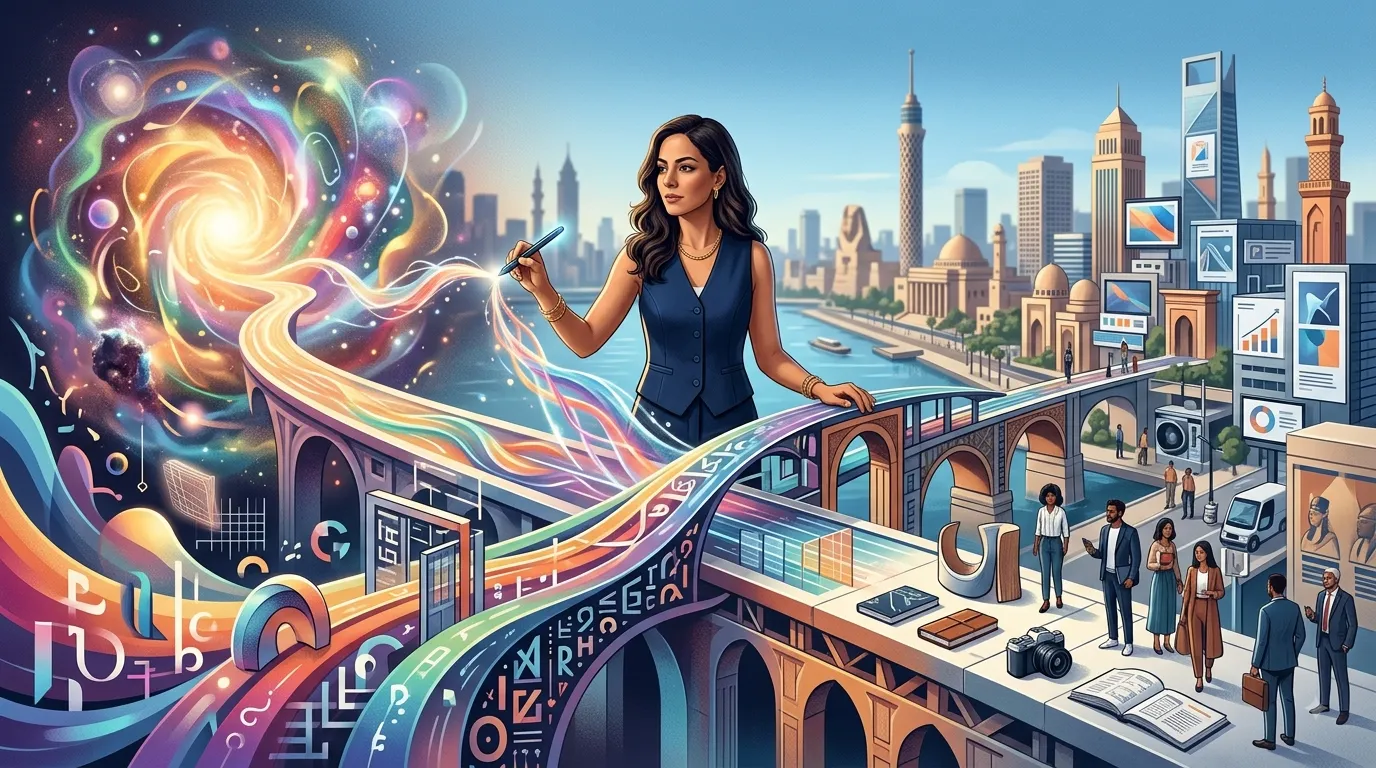
Design is a language of creativity.
It is an art, a communication tool, a problem-solving approach, and a bridge between an idea and the world.
It is much more than lines, colors, images, and typography.
Design transforms ideas into visual and functional experiences that can communicate, inspire, influence, simplify, and remain in people's memories.
From a simple printable design to a global brand identity, from a book cover to a smartphone interface, design shapes the way we experience everyday life.
The strongest designs do not simply ask people to look.
They invite people to understand, feel, interact, and act.
And perhaps this is what makes design so powerful:
Design does not simply make the world look better. It helps us understand the world, interact with it, and imagine what it could become.
Explore More from Ashri Design.Si
Creative ideas do not have to remain ideas.
At Ashri Design.Si, design becomes printable products, digital resources, creative collections, and practical tools designed to inspire creativity and everyday productivity.
Explore the creative world of printable designs, Planners, digital art, and creative resources, and discover how thoughtful design can become part of your everyday life.
Designed to Inspire. Made to create.